

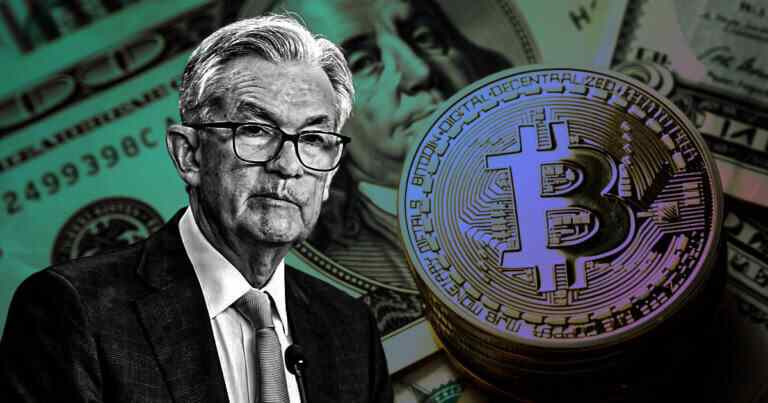
In a candid conversation that shed light on the Federal Reserve’s stance on Bitcoin, Chair Jerome Powell likened the world’s largest cryptocurrency to gold, underlining its role as “digital gold.” However, in the same breath, Powell dismissed the cryptocurrency’s broader functionality, citing its high volatility and limited use in everyday transactions.
During the interview, Powell underscored his view on the speculative nature of Bitcoin, stating, “People use Bitcoin as a speculative asset.” Here, he drew a parallel with gold, another asset often used for speculative purposes, albeit with a significant distinction – Bitcoin’s intangible, digital form. Yet, despite acknowledging the digital currency’s resemblance to gold, Powell was quick to downplay its versatility. He emphasized, “People are not using it as a form of payment or as a store of value. It’s highly volatile.”
This perspective mirrors widespread concerns regarding Bitcoin’s price volatility, which has been a significant barrier to its acceptance as a standard medium of exchange or a reliable store of wealth. By categorizing Bitcoin as a speculative asset akin to gold, Powell underscored that Bitcoin does not pose any substantial threat to the U.S. dollar. In his view, Bitcoin is not a potential competitor for the dollar but is primarily vying with gold for investment dollars.
The chair’s comments serve as a testament to the changing perception of Bitcoin within the financial community. While Bitcoin was initially conceived as an alternative currency, it is increasingly seen as an alternative investment. This evolution in perception reflects Bitcoin’s growing acceptance among both retail and institutional investors, who are drawn to its potential for substantial returns, even as they grapple with its risks.
However, Powell’s comments also underscore the persisting skepticism within traditional financial circles about Bitcoin’s practical applications. Despite its growing prominence and increasing acceptance among investors, doubts remain about its viability as a stable payment method or store of value. This skepticism is rooted in concerns about Bitcoin’s volatility, its susceptibility to theft and fraud, and the regulatory uncertainties surrounding its use.
In sum, while acknowledging Bitcoin’s status as “digital gold,” Powell’s comments underscore the Federal Reserve’s view of Bitcoin as a speculative asset, not a currency or a threat to the U.S. dollar. As the world’s largest cryptocurrency continues to evolve and gain acceptance, these comments offer valuable insight into the thinking within one of the world’s most influential financial institutions. Undoubtedly, they will continue to fuel discussions about Bitcoin’s future role in the global financial system.