
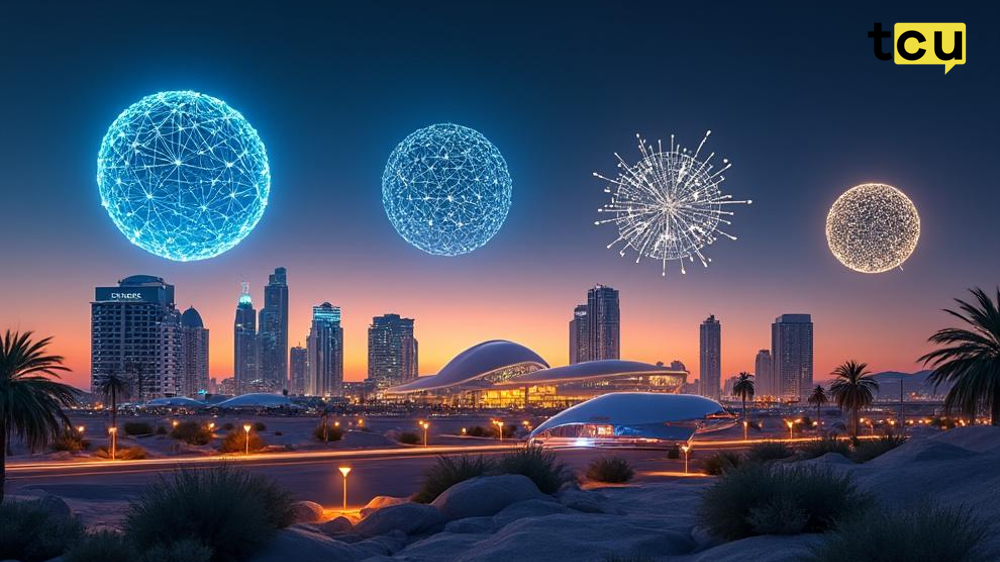
Major Blockchain Gatherings Converge in Abu Dhabi
This week, Abu Dhabi becomes a central hub for blockchain activity with not one, but three significant events happening in the city. The timing is interesting, I think, because it shows how the region is positioning itself in the Web3 space. Bitcoin MENA 2025 kicks things off on December 8th and 9th, bringing together what they describe as the Bitcoin community, industry leaders, and institutional investors.
What’s notable about this event is the speaker lineup. Michael Saylor from MicroStrategy, Changpeng Zhao from Binance, and Simon Gerovich from Metaplanet are all scheduled to appear. That’s a pretty substantial group of voices from different corners of the crypto world. The event promises keynote sessions, workshops, and discussions about Bitcoin’s ecosystem—its potential, innovations, and challenges.
California Hosts Interoperability Summit
Meanwhile, across the globe, California will host the Agentic Interop Summit 2025 on December 9th. This one focuses on payments, identity, interoperability, and discovery. The event seems to be exploring what they’re calling the “agent economy,” which sounds like it involves AI-powered systems.
Fetch.ai is collaborating with Google Cloud for this one, highlighting agent-based solutions. Presentations will cover AI-powered payments and something called Gemini 3 Agentic Capabilities. The emphasis appears to be on practical applications of intelligent agents, particularly for enterprise use. Participants include Craig DeWitt from Skyfire, Danenberg from Google DeepMind, and Attila Bagoly from Fetch.ai.
Global Blockchain Show and Solana Conference Follow
Back in Abu Dhabi, the Global Blockchain Show 2025 runs on December 10th and 11th. Organizers expect over 7,000 Web3 leaders, visionaries, and investors. They’re calling it the most anticipated crypto conference in the UAE, which might be a bit of marketing speak, but the participant list is impressive.
Professor Ronghui Gu from CertiK, Yat Siu from Animoca Brands, and Sergej Kunz from 1inch are among the featured speakers. The event aims to strengthen what they term the “digital future” of the UAE and showcase exclusive advancements.
Then there’s Solana Breakpoint 2025, running from December 11th to 13th, also in Abu Dhabi. This is Solana Foundation’s flagship conference, bringing together their global community. It’s designed as a gathering point for investors, builders, enthusiasts, and developers to explore innovations within the Solana ecosystem.
The schedule includes workshops, talks, and interactive experiences. Anatoly Yakovenko from Solana Labs, Mike Novogratz from Galaxy, and Chad Cascarilla from Paxos are among the notable participants.
Regional Focus and Timing
Having four major events in one week—three in Abu Dhabi and one in California—creates an interesting dynamic. It suggests that December is becoming a busy month for blockchain conferences, perhaps because organizations want to wrap up the year with major announcements or networking opportunities.
The concentration of events in Abu Dhabi specifically points to the UAE’s growing role in the blockchain space. Whether this represents a strategic shift or simply convenient scheduling is hard to say, but the timing does create a sort of mini-festival atmosphere for those in the region.
What strikes me is the variety of focus areas—from Bitcoin-specific discussions to broader Web3 topics, interoperability challenges, and platform-specific ecosystems like Solana. Each event seems to cater to slightly different audiences, though there’s likely some overlap among participants who might attend multiple gatherings.
The practical implications for attendees include networking opportunities, learning about emerging trends, and potentially discovering new tools or partnerships. For the hosting cities, there’s the economic benefit of hosting thousands of visitors, plus the positioning as blockchain-friendly destinations.
It’s worth noting that while these events promise significant insights and connections, the real value often comes from the informal conversations and side meetings that happen around the scheduled programming. That’s where deals get made and collaborations form, I think.