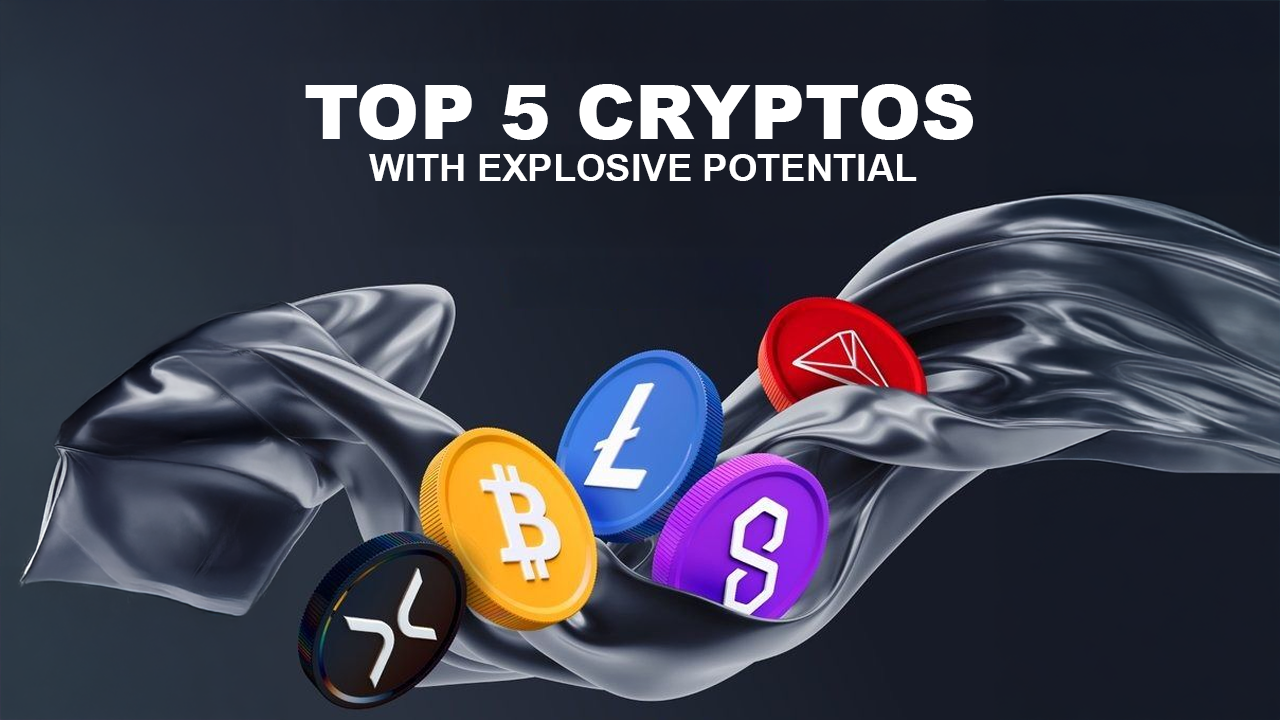
The world of cryptocurrencies continues to evolve at lightning speed, with innovative projects launching daily and pushing the boundaries of what blockchain technology can do. The latest buzz in the crypto space revolves around AI-integrated blockchains, which are promising to bring smarter, faster, and more efficient solutions to the market. Among these emerging players, there’s one that’s capturing a lot of attention, and it’s not just the buzz—there’s some real meat behind this coin’s potential.
As blockchain becomes an integral part of everyday life, one area that is finally seeing some real disruption is in the tokenization of real-world assets. While other coins have dabbled in this space, no one has cracked the code as well as Qubetics ($TICS). But let’s not get ahead of ourselves. First, let’s dive into the existing players in the crypto market and explore how they’re setting the stage for the next big thing in blockchain.
1. Qubetics ($TICS): The Game-Changer in AI-Blockchain Integration
Qubetics has been making waves lately, and it’s easy to see why. With its crypto presale currently in its 25th stage, the project has raised over $14.8 million and sold more than 497 million tokens to over 22,600 holders. The $TICS token is priced at $0.1074, and analysts are predicting an impressive return on investment (ROI). When the presale ends, $TICS is expected to jump to $0.25, offering a 132% ROI. Post-presale, analysts are predicting a surge to $1, $5, or even $15 per token.

But why all this excitement? Well, the answer lies in Qubetics’ integration of cutting-edge AI with blockchain technology. The platform promises to bring real-world asset tokenization into the mainstream, which could revolutionize industries from real estate to agriculture, especially in the Central Asian region.
Why Did This Coin Make It To This List?
What sets Qubetics apart from other cryptocurrencies is its practical use case and the enormous potential it has in solving the real-world problem of asset tokenization. While most blockchain projects focus on general transactions, Qubetics aims to solve the challenge of
turning physical assets into digital tokens that can be traded and exchanged easily, securely, and transparently. This is precisely what businesses in regions like Central Asia have been waiting for—a tool that can enable seamless asset management and trading.
Qubetics’ Real World Asset Tokenisation Marketplace
Qubetics’ Real World Asset Tokenization Marketplace is not just a theoretical concept—it’s an actual, functioning part of its ecosystem. For businesses in Central Asia, this could be the key to unlocking untapped potential in sectors like real estate, agriculture, and energy. By tokenizing assets, Qubetics creates a more accessible and liquid market where businesses can leverage the value of their physical assets without having to deal with the barriers typically associated with traditional asset management.
Imagine a farmer in Kazakhstan wanting to sell a portion of their land. In the past, they’d face enormous red tape, high costs, and limited access to global markets. But with Qubetics, that land can be tokenized—turned into a digital asset—and sold or traded easily on a global platform. The same goes for real estate, machinery, or even artwork. Tokenization makes it easier for anyone to get involved in the global market, no matter where they’re located.
2. Quant: The Interoperability Pioneer
Quant has been another standout player in the crypto space, with its focus on interoperability. The platform is designed to bridge different blockchain ecosystems, allowing them to communicate seamlessly. This is a major achievement because the blockchain space has often been fragmented, with different chains operating in isolation. By creating the Overledger Network, Quant has created a protocol that allows multiple blockchains to work together, enabling the smooth transfer of assets and data.
Recently, Quant has been working on partnerships with various enterprises to enable blockchain interoperability on a global scale. As industries continue to explore blockchain for various use cases, Quant’s ability to bridge gaps and enable collaboration between different blockchain networks becomes more valuable.
Quant made it to this list because it addresses a crucial problem: blockchain interoperability. In a world where multiple blockchains operate independently, the ability to connect them seamlessly is invaluable. With its Overledger Network, Quant is paving the way for a more unified and efficient blockchain ecosystem, which will be key as the industry grows and matures.
3. Aptos: The New Kid on the Block
ptos is a relatively new blockchain project that has caught the attention of many in the crypto space. Built by former Meta (Facebook) employees, Aptos aims to be the blockchain of the future by focusing on scalability, security, and user experience. The platform leverages the Move programming language, which is designed to be safe and flexible, allowing for faster transaction processing and more robust smart contracts.
Aptos has recently been making headlines due to its high-profile partnerships and integration with decentralized finance (DeFi) projects. The platform has quickly gained traction, and many believe it could be a serious competitor to Ethereum and other established blockchains.
Aptos made it to this list because it combines innovative technology with the experience of its founding team. By addressing scalability and security issues, Aptos has positioned itself as a formidable contender in the world of smart contract platforms. As the platform continues to grow, it will likely play a significant role in the expansion of decentralized applications and DeFi.
4. EOS: The Veteran with New Ambitions
EOS is one of the older cryptocurrencies on the market, but it’s still a major player in the space. Originally launched as a competitor to Ethereum, EOS aims to offer faster and more scalable blockchain solutions. The platform uses a delegated proof-of-stake (DPoS) consensus mechanism, which allows for faster transaction processing and greater scalability.
Recently, EOS has been making moves to rebrand itself and focus on new use cases, such as the integration of AI and machine learning into its ecosystem. This new direction could potentially revitalize the EOS project and help it compete with the newer, more agile blockchain platforms emerging in the market.
EOS made it to this list because of its history and potential for revitalization. While it has faced challenges over the years, its new focus on AI and machine learning integration could open up new avenues for the platform. As the blockchain space evolves, EOS could find its niche once again, especially if it successfully integrates the latest innovations in blockchain technology.

5. Gala: Revolutionizing Gaming with Blockchain
Gala has been making waves in the gaming sector, and for good reason. The platform is designed to help developers create decentralized games, giving players more control over their in-game assets. Gala has been attracting attention due to its focus on enabling true ownership of in-game items, which is a game-changer for the gaming industry.
In the past year, Gala has partnered with several major game developers to bring blockchain-based games to the masses. The platform also recently launched its own marketplace, where players can buy, sell, and trade in-game assets as NFTs. This has helped Gala establish itself as a leader in the blockchain gaming space.
Gala made it to this list because it’s at the forefront of the blockchain gaming revolution. With its focus on player empowerment and ownership of in-game assets, Gala is setting the stage for a new era in gaming. As more players and developers flock to the platform, Gala’s value will likely continue to rise.
Conclusion:
Based on research and analysis, it’s clear that the world of cryptocurrencies is evolving rapidly, and projects like Qubetics ($TICS) are leading the charge. Whether it’s through top AI crypto integration, tokenization of real-world assets, or enabling blockchain interoperability, these projects are shaping the future of the blockchain space.
As the industry continues to mature, it’s essential to pay attention to emerging projects that combine technological innovation with real-world utility. Qubetics, in particular, stands out with its practical applications, which could have a lasting impact on industries worldwide. With its ongoing presale and impressive growth trajectory, $TICS is a coin to watch.
Don’t miss the chance to get in on the ground floor—this could be the opportunity you’ve been waiting for.

For More Information:
Qubetics: https://qubetics.com
Telegram: https://t.me/qubetics
Twitter: https://x.com/qubetics
FAQs
What is Qubetics and why is it considered one of the top AI cryptos?
Qubetics integrates AI with blockchain technology to offer real-world asset tokenization. Its practical use cases in industries like agriculture and real estate make it one of the most promising projects in the crypto space.
How does Quant contribute to blockchain interoperability?
Quant’s Overledger Network bridges the gap between different blockchains, enabling seamless communication and data transfer. This is crucial for creating a more connected blockchain ecosystem.
Why is Aptos gaining popularity in the crypto space?
Aptos focuses on scalability and security, addressing the limitations of existing blockchains. Its use of the Move programming language and partnerships with DeFi projects make it a contender in the smart contract space.
What makes Gala unique in the crypto market?
Gala focuses on blockchain gaming, offering players true ownership of in-game assets. Its partnerships with game developers and the launch of a marketplace make it a leader in the space.